01
Hydrogen peroxide
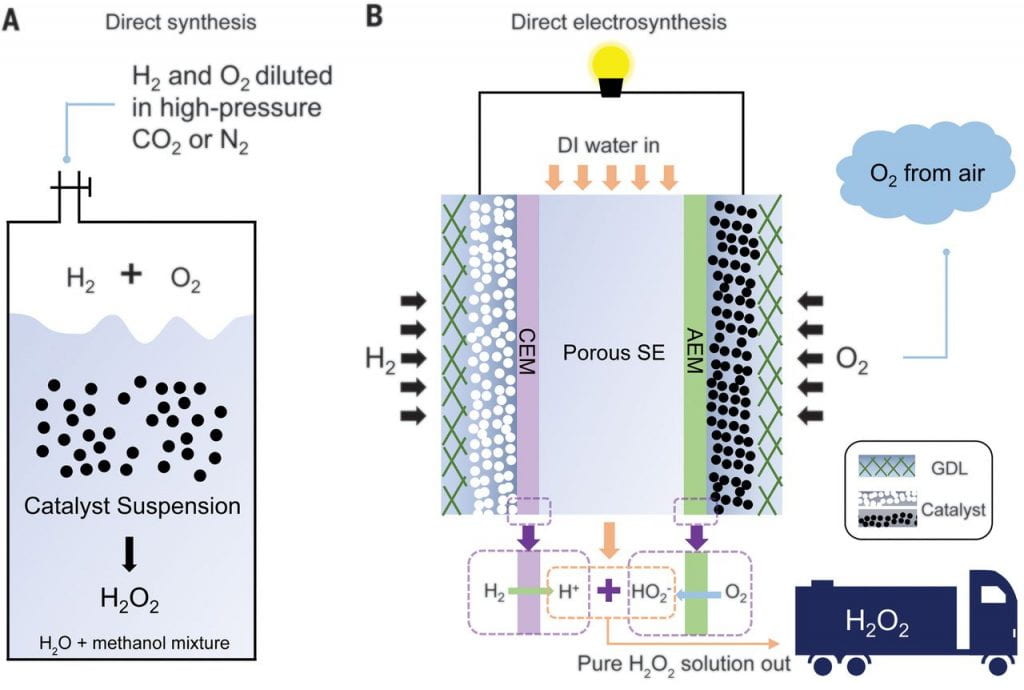
Oxygen reduction generates hydroperoxide ions, which combine with protons in the PSE region to form H2O2. A deionized-water stream collects the product, and the water flow rate provides a way to adjust its concentration.
 The Wang GroupTongji University
A porous, ion-conducting layer creates a dedicated region for transport, ionic recombination and product collection inside an electrochemical reactor.
This porous solid electrolyte reactor brings together two electrodes, selective membranes and a central collection layer. The cathode and anode each combine a flow field, a gas diffusion layer and a catalyst layer. Ions travel into the PSE layer, where a water stream collects the product.
Electrocatalysts produce the ionic species required by the target chemistry.
Selective membranes and the porous ion-conducting bed guide ions through the device.
A separate flow path removes the product or recovered stream from the PSE region.
Oxygen reduction generates hydroperoxide ions, which combine with protons in the PSE region to form H2O2. A deionized-water stream collects the product, and the water flow rate provides a way to adjust its concentration.
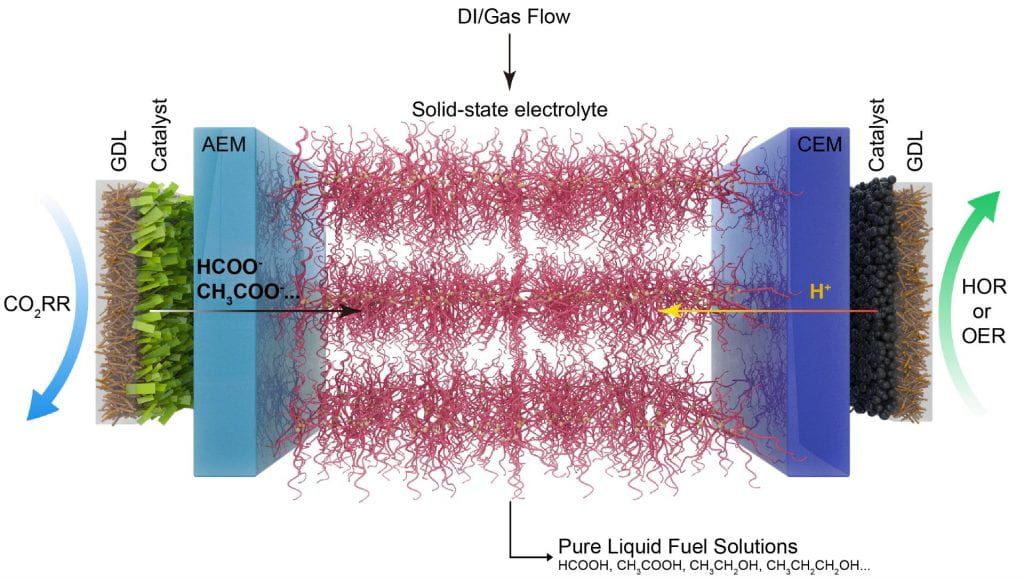
The solid-electrolyte architecture has been demonstrated for collecting formic acid from CO2 reduction and acetic acid from CO reduction. Separating the collection compartment from the electrode electrolytes enables direct recovery of aqueous product solutions without added supporting-electrolyte salts.
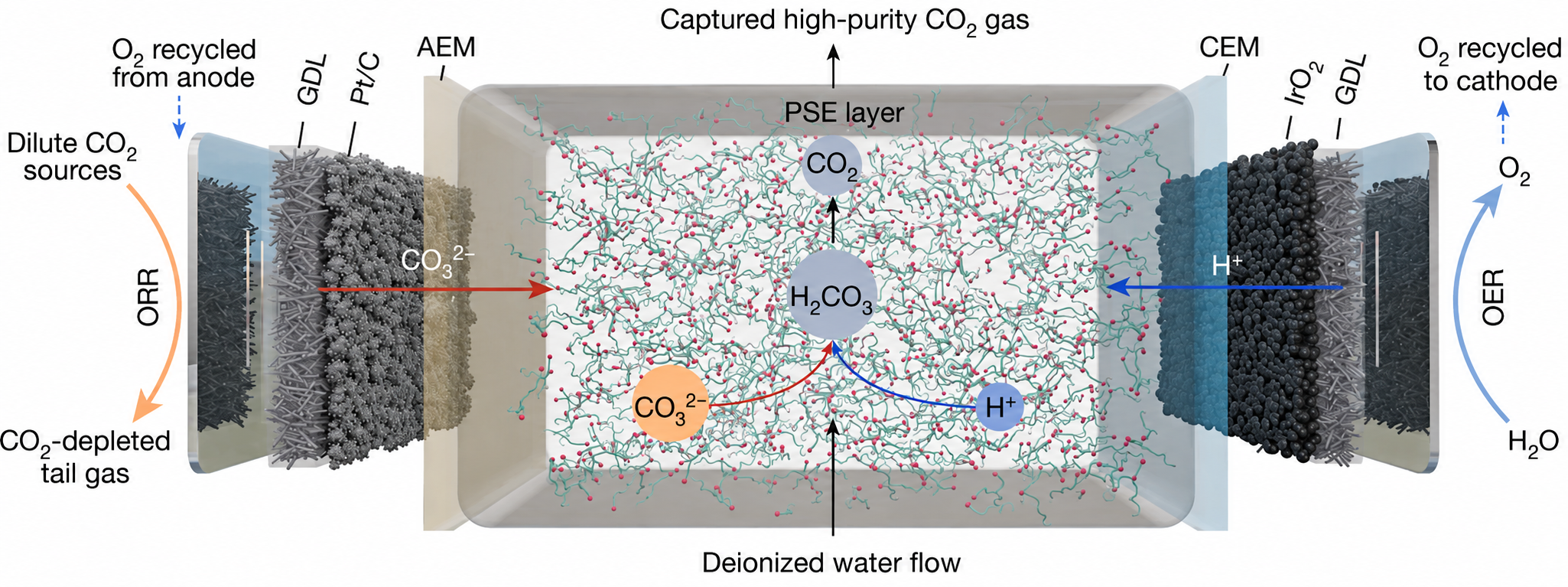
Application-specific PSE reactors also use controlled ion transport to capture and release CO2. Reported configurations include continuous carbon capture and the regeneration of high-purity CO2 from carbonate or bicarbonate solutions, alongside alkaline sorbent regeneration.
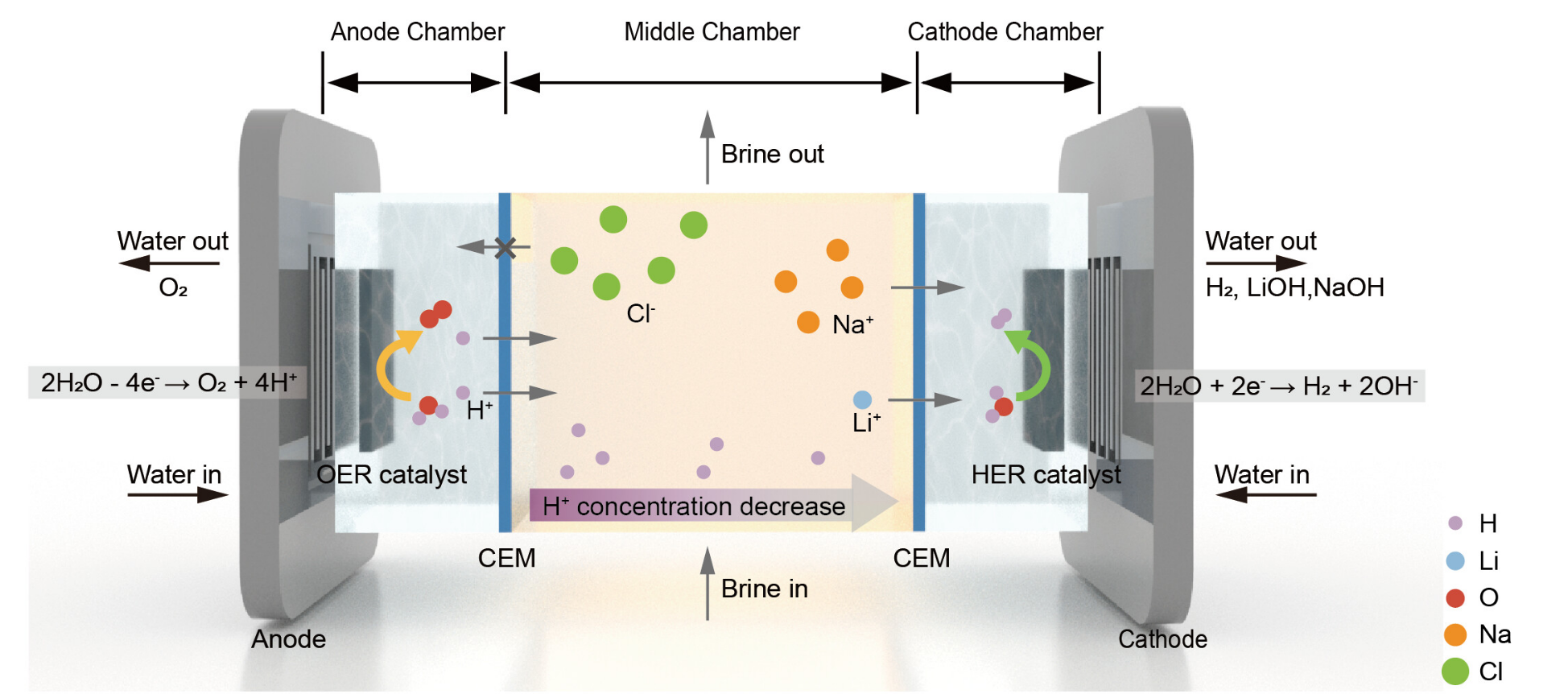
A three-chamber PSE reactor selectively extracts lithium from brine for lithium hydroxide production. A separate closed-loop process uses a PSE reactor to regenerate acid and base for recovering lithium and transition metals from spent battery cathodes as manufacturing feedstocks.
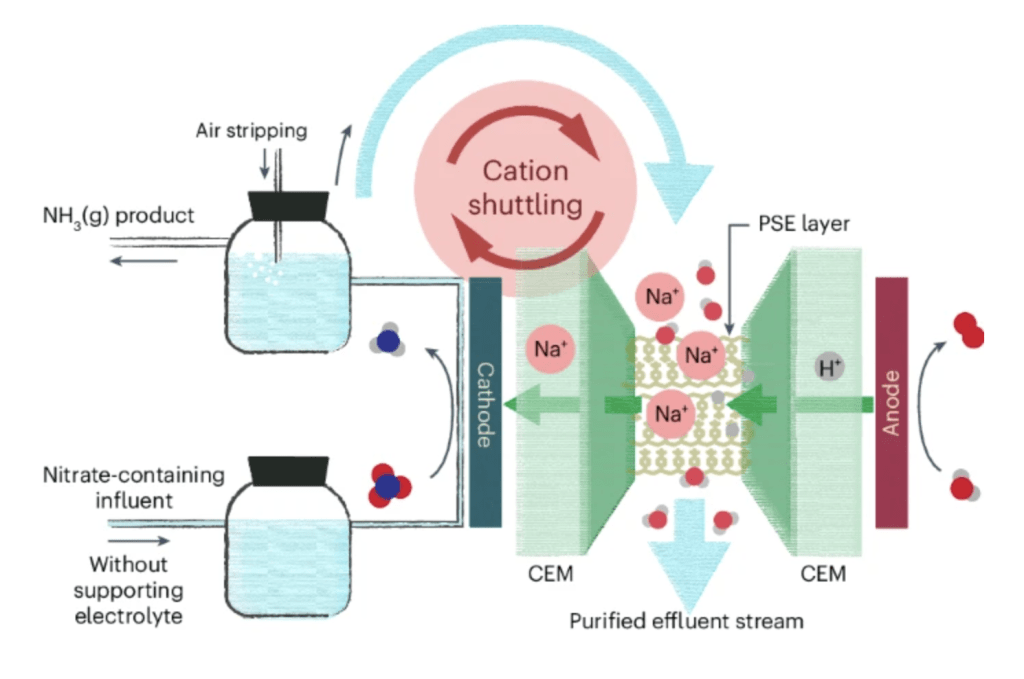
A three-chamber PSE reactor converts nitrate in water to ammonia. Recirculating treated water through the porous electrolyte layer shuttles alkali cations back to the cathode, improving nitrate reduction without adding a supporting electrolyte to the feed. The study demonstrated separate recovery of treated water and gaseous ammonia under representative nitrate concentrations.